Wire components on a live canvas, write firmware, and watch it run on emulated CPUs with real-time analog simulation — entirely in your browser. Hosted on our own infrastructure: private, fast, nothing to install.
A full electronics lab — editor, compiler, emulated silicon and measurement instruments — with nothing between you and a running circuit.
Your firmware executes on emulated AVR8, RP2040, Xtensa and RISC-V cores — actual instruction-level behaviour, not a canned animation.
A SPICE engine solves your circuit in real time while the code runs — voltages and currents respond the way a real breadboard would.
LEDs, sensors, displays, motors and more — plus an oscilloscope, voltmeter and ammeter for when you need to look closer.
Search the full Arduino library registry and install straight into the built-in compiler — no toolchain on your machine.
The catalog doesn't have your part? Model its behaviour yourself in C or Rust and drop it into the circuit like any other component.
Runs on our own servers. No third-party cloud, no trackers, no telemetry — your projects stay yours.
The canvas isn't limited to one MCU — drop several boards into a single circuit and let them run side by side.
A real UART console for every board: print, log and type back to your firmware without leaving the tab.
Sketches compile with the genuine board toolchains on our server — code that builds here builds on real hardware.
Breadboards behave hole-for-hole like hardware — column strips and power rails are electrically connected.
Projects are plain files you own — export a circuit, share it, bring it back, or check it into git.
Windows, macOS, Linux or a school Chromebook — if it runs a browser, it's a workbench.
From a first blink to gate-level adders and BJT amplifiers — open one, press run, and pick it apart in the editor.
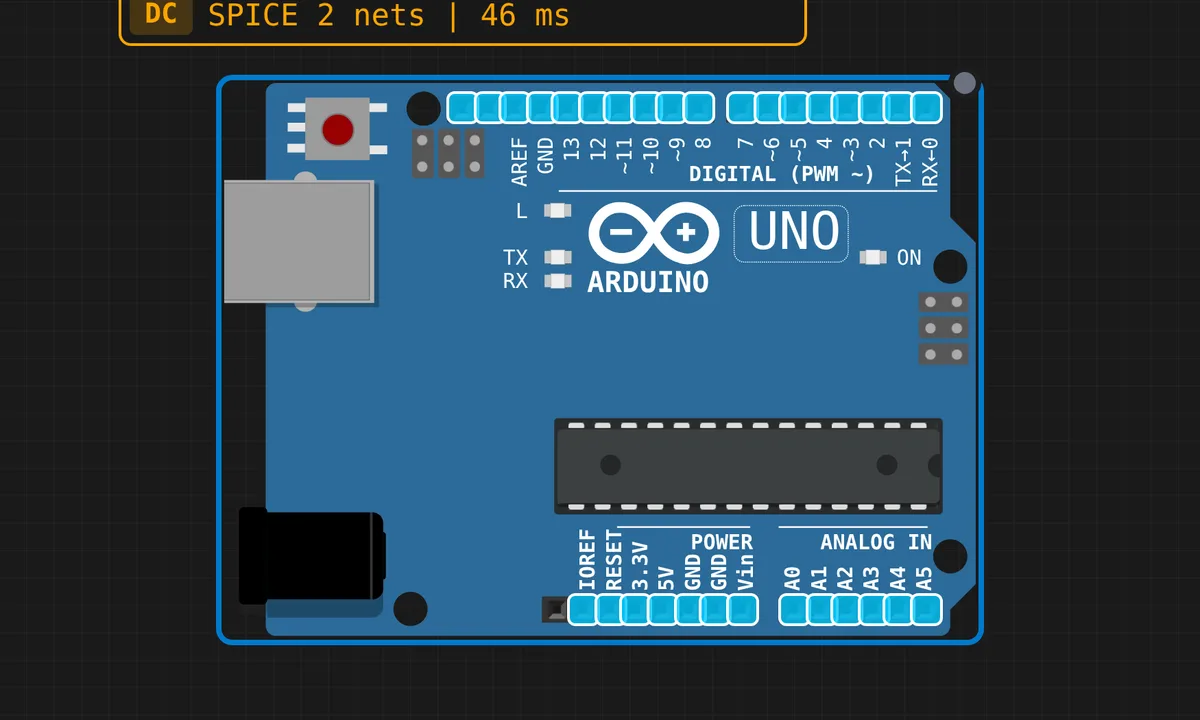
The classic first sketch — toggle an LED on and off.
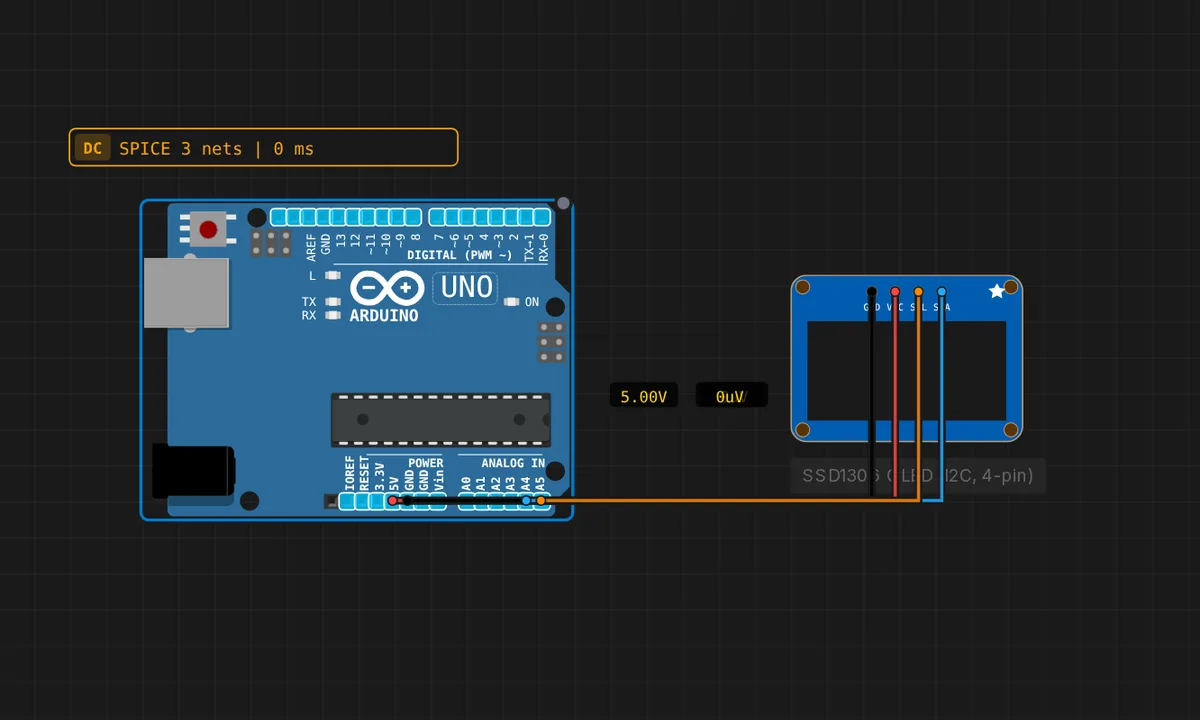
Drive the 4-pin OLED module over I2C with a live counter on screen.
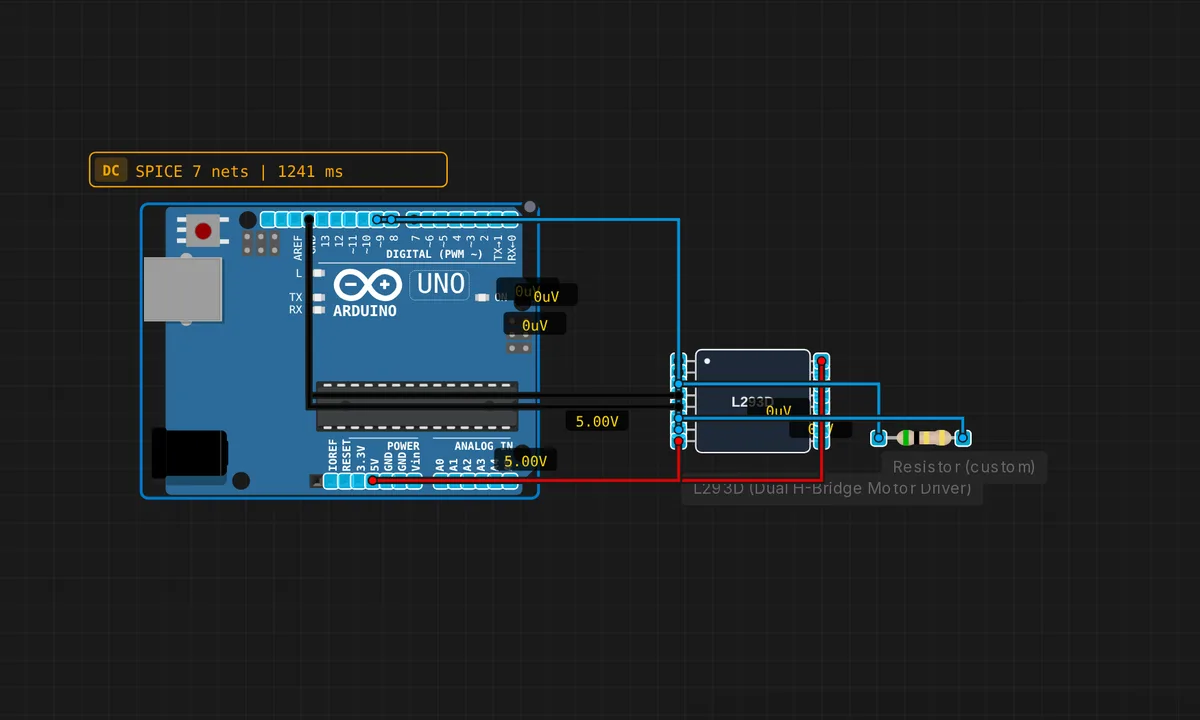
An L293D H-bridge drives a DC motor forward, reverse and brake.
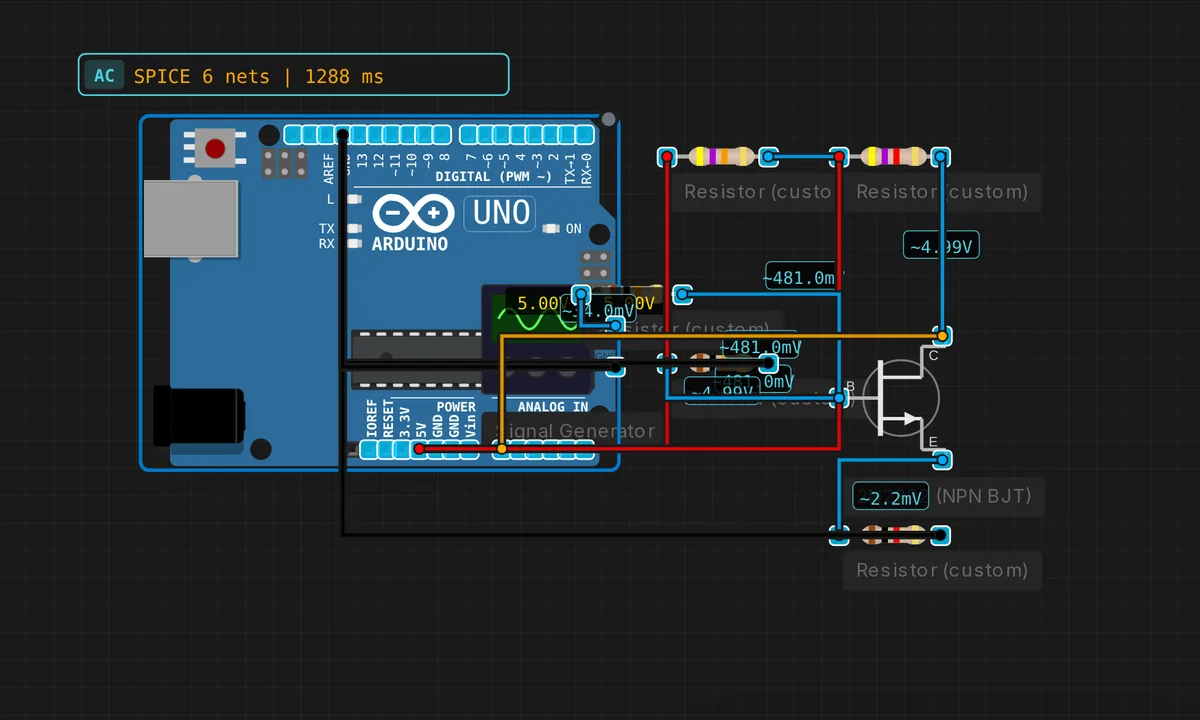
An NPN BJT amplifies a small AC signal. Gain = −Rc/Re.
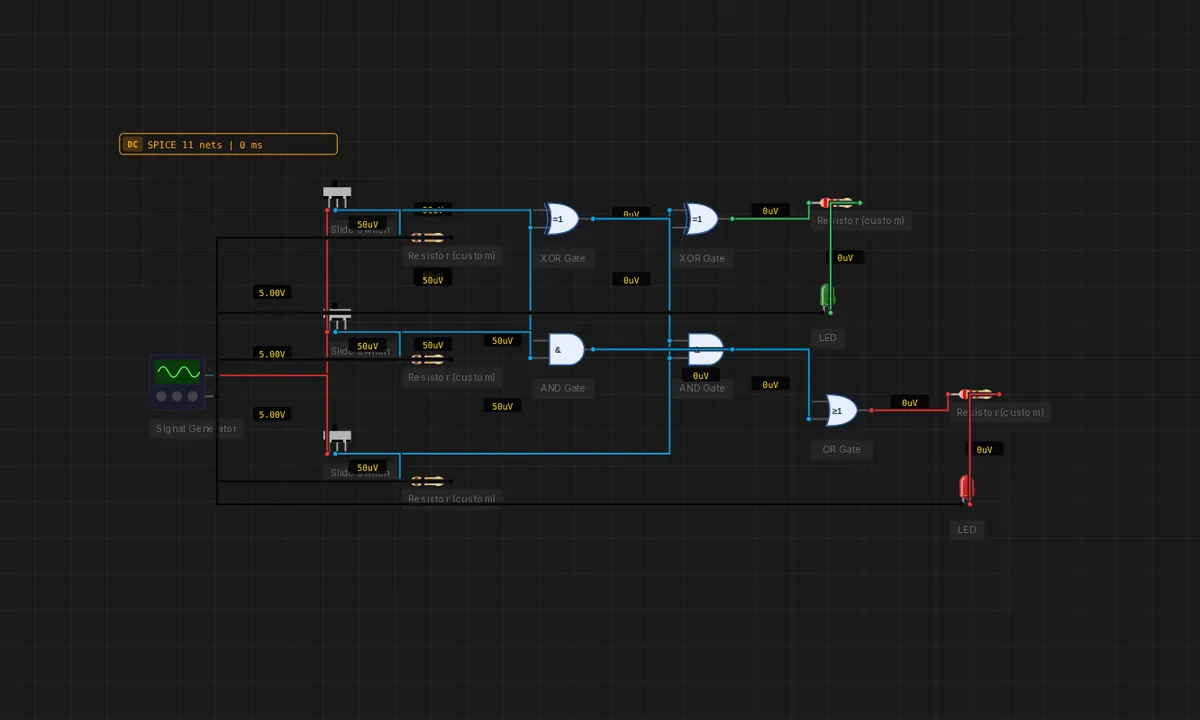
Two XORs, two ANDs and one OR — the classic cascade-able adder cell.
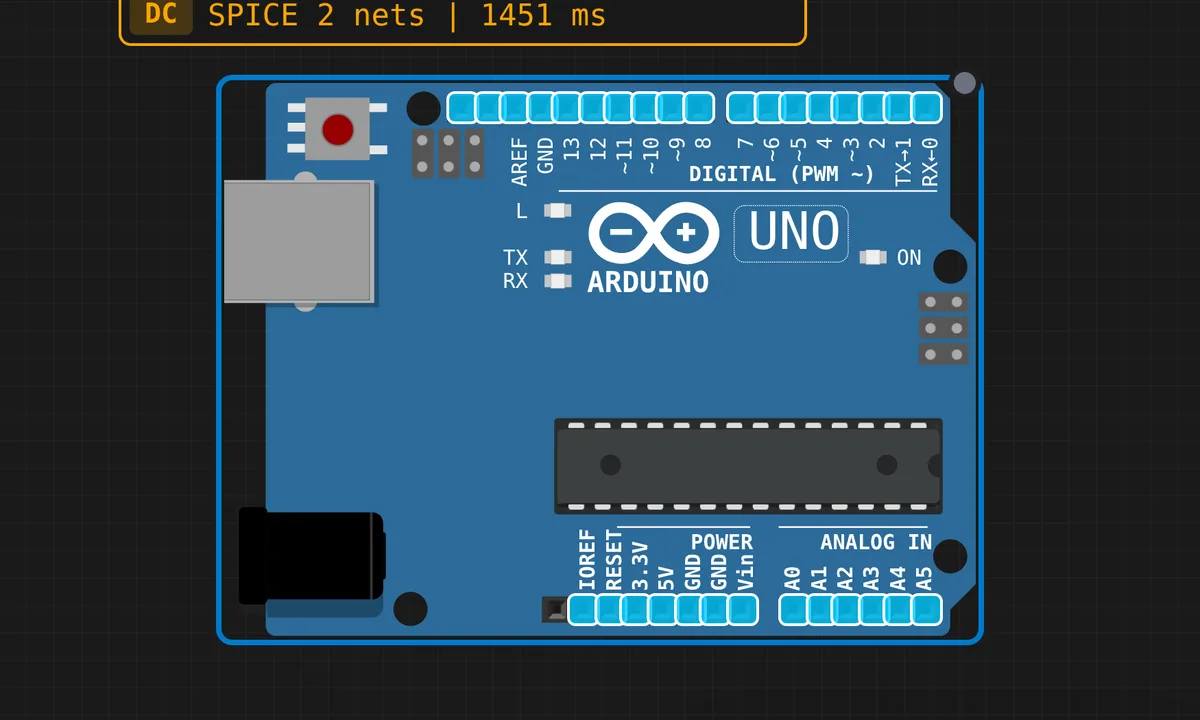
Reads the time from a virtual DS1307 over I2C and prints it to Serial.
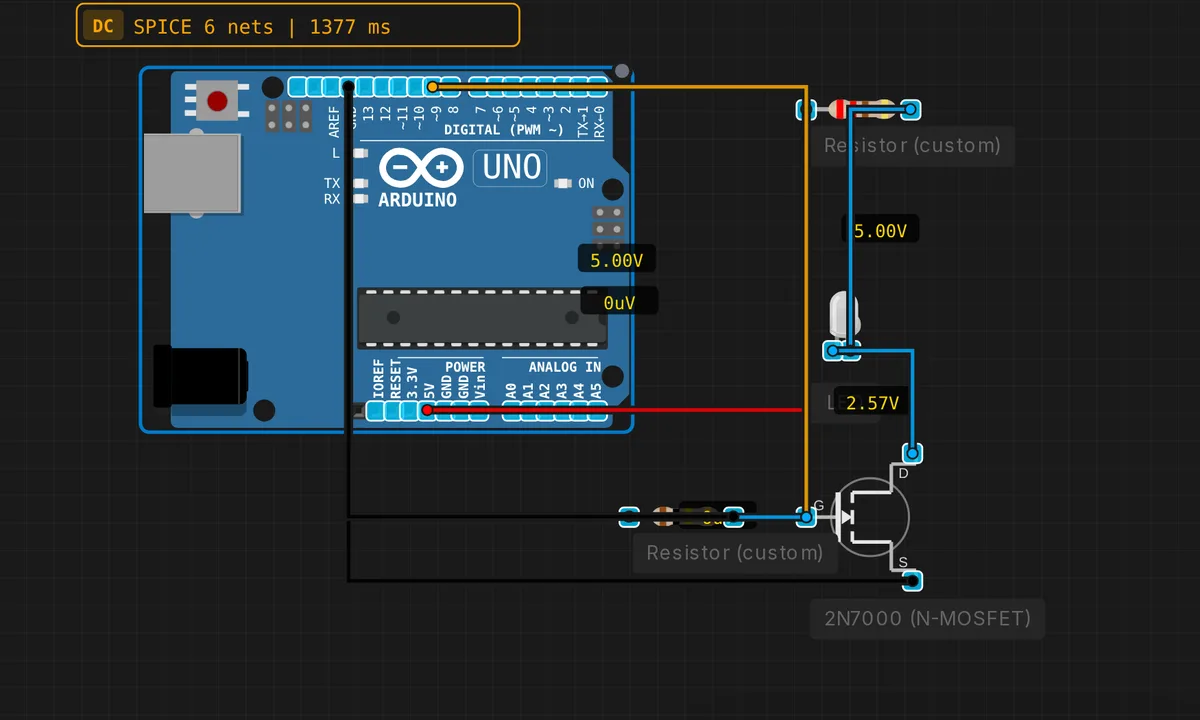
A 2N7000 as low-side switch — PWM on pin 9 dims the LED.
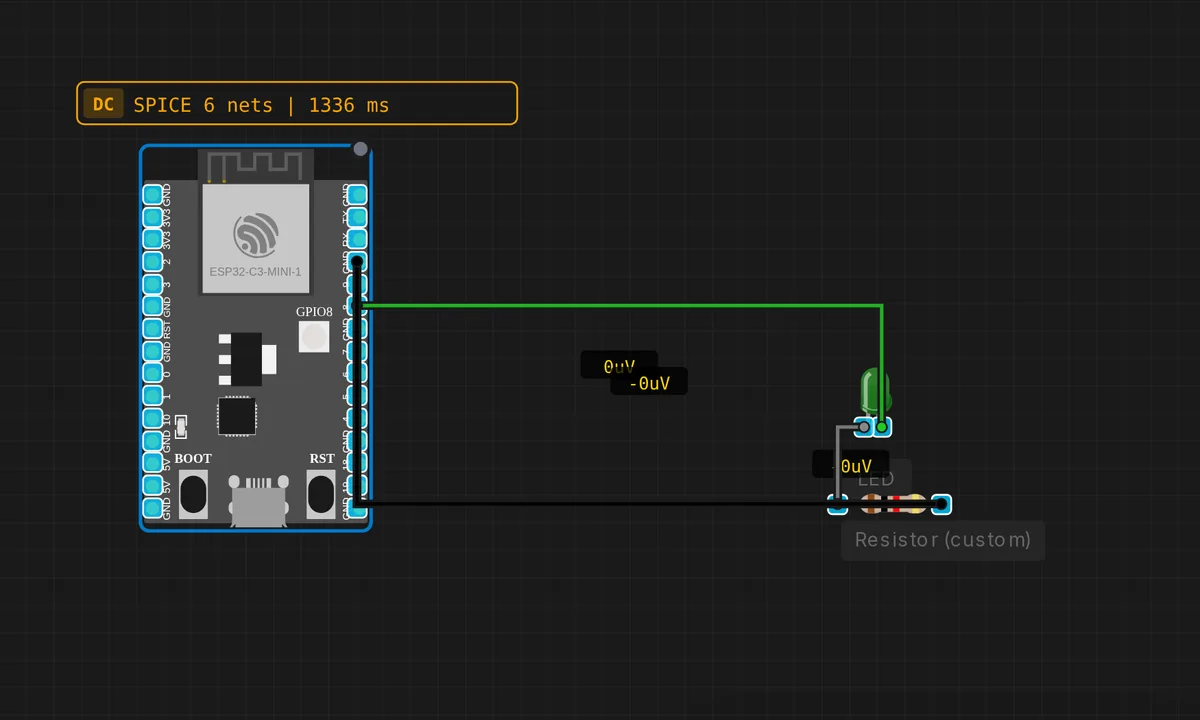
RISC-V blink through the QEMU backend at 160 MHz.
From an 8-bit ATtiny to a dual-core ESP32 — pick a board, wire it up and the right emulated core boots underneath.
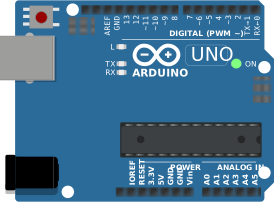
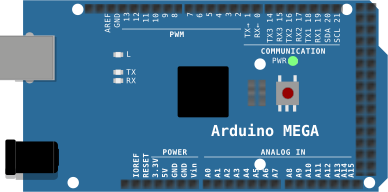

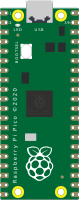
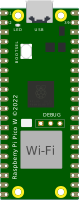
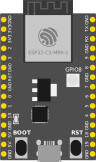


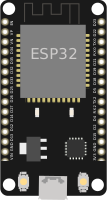
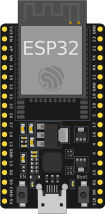
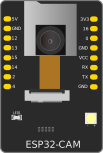
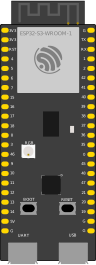

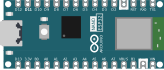
155 parts across 10 categories — exactly what the editor's Add panel gives you, from passives to full driver ICs.
Alpha Sim is a full circuit and microcontroller studio served from our own infrastructure. Your projects run in your browser and stay on this platform — no third-party cloud, no trackers, no telemetry.
The simulation core is open-source software (AGPLv3) that we self-host and keep up to date, and every board, component and example on this page is read from the running editor — not a brochure. If something behaves differently from real hardware, tell us through the support center; that's the fastest way to make the lab better.
Open the editor, drop a board on the canvas and press run.
Launch the editor → Alpha Sim